
Acid reflux: this means, there is too much heat in the system. We must cool the agni (digestive fire).
Avoid: stress and reduce anger.
No TV during meals, no heated discussions during meals
Avoid liquor or alcohol
Avoid spicy foods
Eat fresh, cooling foods like cucumber, leafy greens, fresh fruits
Herbs that help: Fennel seed, coriander, licorice
Yoga Asanas that help: Vajrasana, pawanmuktasana, ushtrasana, majariasana
For fast relief, try 1 pint celery or cabbage juice.
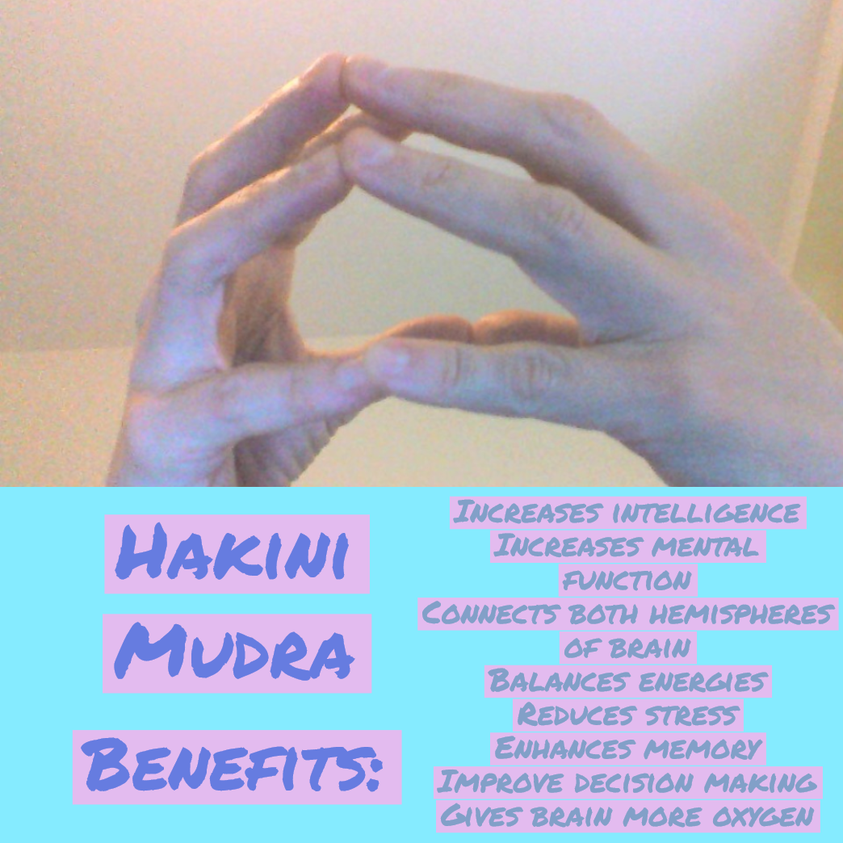
The power of mudras: Hakini mudra
Ama – Toxins in the body
What does Ama, or toxins, look like in the body?
You may have toxins in the body if you have any of these symptoms:
confusion
lack of mental clarity
brain fog
anxiety or too much worry
digestion problems, including constipation, bloating, gas, abdominal extension
bad breath
white coated tongue
lethargy and no energy
no motivation
lack of will power
no desire to do anything
sadness
depression
mood swings
anger
fear
making poor choices
there can also be other physical symptoms, such as:
fever
cough
body aches
lethargy
runny nose or build up of thick mucus
loss of taste
The best ways we can improve how many toxins we take into the body is by improving our digestive power, not only on a physical level, like digesting our food, but also on a mental and emotional level. We must learn how to digest experiences, also.
Making good, healthy food choices, getting proper sleep, making good choices about who we associate with, making sure we take in and consume wholesome experiences, getting fresh air and exercise, doing work that fulfills us – these are all just some things we can do to ensure we are living in a healthy way.
When our digestion is functioning at maximum, our immune system is the strongest and we can fight off whatever tries to attack us.
Handstand benefits – Adho Mukha Vrksasana

Digest your food better
What are just three things you can do today to digest your meals better? Here they are!
1.) Add some spices. Ginger, black pepper, cardamom and other warming spices will help to break the food down and be absorbed properly once its in the small intestine. In Ayurveda you can look for’Trikitu’ — this is a special combination of ginger powder, black pepper and long pepper, also called ‘pippali’. Used since ancient times, this special three spice mix work excellent for stimulating the appetite and helping to break down foods, increasing the digestive fire and burning toxins. With maximum digestion and absorption, this means there is more energy and vitality in your body!
2.) Chew. Over 80 percent of digestion takes place in the mouth. We want to have our food pretty well broken down before it hits the stomach or our stomach will have to do the majority of the work — and that is not the stomachs primary job! If huge chunks are coming down the throat into the stomach, it is not only dangerous for a risk of choking, but will also create a lot of bloating, digestive discomfort, possible abdominal extension and an annoying belly-ache. We digest the food primarily in the mouth and that is why we have a tongue and teeth.
3. Eat when hungry. So many times people are snacking all day long, or they eat a big meal and after one hour, they eat again, even if not hungry. They are creating a traffic jam in their digestive system. We want to wait until the previous meal has moved out of the stomach and has at least started being absorbed into the small intestine. Something light just a piece of fruit is ok, but if you eat a huge healthy meal, you should not need to eat again for at least 4-5 hours.
Check to make sure you are eating when actually hungry and not just for emotional or stress-related reasons. Spending time in meditation and listening to your body will help you understand the difference between emotional eating and real hunger. Sometimes, for example, when we are nervous or cannot sit still, we feel like we need to munch. Recognizing our signs of anxiety can assist us in eliminating these kind of unwanted habits.
Doing everything with mindfulness will bring the body to peace.